PCCB Clearance Explained — 5 Things Every Porsche Owner Must Know
PCCB Clearance Explained
PCCB clearance is the detail that separates a Porsche wheel build done correctly from one that fails at the worst possible moment.
Porsche Ceramic Composite Brakes — PCCBs — are one of the most technically advanced and most physically imposing brake systems fitted to any production road car. They are also one of the most frequently overlooked fitment considerations when Porsche owners choose aftermarket wheels. The result, in too many cases, is a set of wheels that looks perfect in photographs, clears the standard iron caliper geometry, and then makes catastrophic contact with the PCCB caliper on the first corner taken at speed.
This is not a minor inconvenience. Wheel-to-caliper contact at driving speeds is a serious safety event — one that can damage the wheel, damage the brake caliper, compromise braking performance, and in the most severe cases, cause a complete loss of vehicle control. It is entirely preventable with correct fitment knowledge applied before the wheel is ordered. And it is entirely the result of insufficient fitment knowledge when it occurs.
At Elite BBS Wheels, PCCB clearance is a confirmed specification on every Porsche build we undertake. We have built BBS wheels for Porsche 964, 993, 996, 997, 991, and 992 platforms — across GT3, GT3-RS, GT2, Turbo, and Carrera variants — and on every PCCB-equipped platform, caliper clearance is verified before a single component is ordered. This post shares everything we know about PCCB clearance — what it means, why it matters, how it is measured, and what wheel specifications are confirmed to clear PCCBs on the platforms we build for most frequently.
Why PCCB Clearance Catches So Many Porsche Owners Off Guard
The PCCB clearance problem is more common than it should be — and the reason it catches so many Porsche owners off guard is a combination of inadequate information at the point of wheel purchase and a widespread underestimation of how much larger PCCB calipers are compared to standard iron brake calipers.
Most wheel fitment guides, most wheel sellers, and most online fitment databases are built around standard brake caliper dimensions. When a wheel is listed as compatible with a specific Porsche platform, that compatibility is almost always assessed against the standard iron caliper geometry of that platform — not the PCCB caliper geometry. The two are not interchangeable specifications.
PCCB calipers are significantly larger than standard iron calipers. The ceramic composite rotor — lighter, more heat-resistant, and more fade-resistant than an iron rotor — requires a caliper with different mounting geometry, different piston configuration, and different overall dimensions to deliver the clamping force and pad contact area that the ceramic rotor surface demands. The result is a caliper that extends further inboard, further outboard, and further into the wheel barrel space than a standard iron caliper on the same platform.
This dimensional difference is substantial enough that a wheel specification confirmed to clear a standard iron caliper may have zero clearance — or negative clearance — against a PCCB caliper on the same platform. A wheel that fits perfectly on a standard 991 GT3 may contact the PCCB caliper on a 991 GT3 equipped with the ceramic brake option. The platform is the same. The bolt pattern is the same. The hub bore is the same. The caliper geometry is completely different.
The second reason PCCB clearance catches Porsche owners off guard is the cost and complexity of the brake system itself. PCCBs are an expensive factory option — typically several thousand dollars on a new Porsche — and owners who have specified or inherited them on their cars are understandably reluctant to investigate whether their wheel choice will interfere with a brake system of that value. The reluctance to confront the question leads to purchases made without clearance confirmation — and the discovery that confirmation was necessary comes at the moment of contact, not the moment of purchase.
Understanding PCCB clearance before you buy wheels is not optional knowledge for PCCB-equipped Porsche owners. It is the most important fitment question you can ask — and it needs to be asked and answered before the order is placed.
PCCB Clearance Explained Completely
What Are PCCBs and Why Do They Create Clearance Challenges?
Porsche Ceramic Composite Brakes are a factory brake option available across a wide range of Porsche models — from the Cayenne and Panamera to the 911 GT3, GT3-RS, GT2, and Turbo variants. They use rotors made from a carbon fibre reinforced ceramic composite material rather than the cast iron used in standard Porsche brake systems.
The ceramic composite rotor offers several significant performance advantages over iron — dramatically lower weight, superior heat resistance, reduced brake fade under repeated hard braking, and longer service life under performance driving conditions. These advantages are achieved through a manufacturing process and material science that requires a specific caliper design optimized for the ceramic rotor surface — and that specific caliper design is the source of the clearance challenge.
PCCB calipers are monoblock aluminum units — a single machined aluminum body rather than the two-piece construction used in many performance brake calipers. This monoblock construction contributes to the caliper’s rigidity and its ability to maintain consistent clamping force across the full ceramic rotor contact area. But the monoblock geometry also means the caliper presents a larger, more continuous profile into the wheel barrel space than a two-piece caliper of equivalent braking capacity.
The combination of larger overall caliper dimensions and the monoblock geometric profile creates a clearance envelope that is significantly more demanding than standard iron caliper clearance — and that must be specifically and individually verified for each wheel specification on each PCCB-equipped Porsche platform.
How PCCB Clearance Is Measured and Confirmed
PCCB clearance is measured as the minimum distance between the innermost point of the wheel — typically the inner face of the spoke or the inner barrel wall — and the nearest point of the PCCB caliper at any position of the wheel’s rotation.
This measurement must be taken at the correct wheel offset and with the wheel correctly centered on the hub — because both offset and hub-centric seating affect the position of the wheel relative to the caliper. A wheel that appears to clear the PCCB caliper when held loosely against the hub may contact it when correctly seated and torqued to specification, because the correct seated position places the wheel marginally closer to the caliper than the loose position suggests.
The measurement must also account for caliper flex under braking loads. Under hard braking, the PCCB caliper deflects slightly under the clamping forces generated between piston and pad. This deflection moves the caliper marginally toward the wheel — reducing the static clearance measured with the brake system at rest. A wheel that clears the PCCB caliper by 2mm at rest may have insufficient clearance under hard braking if that clearance does not account for caliper deflection.
At Elite BBS Wheels, PCCB clearance confirmation on Porsche builds involves direct measurement of caliper-to-wheel clearance using calibrated measurement tools, cross-referenced against platform-specific caliper dimension data and confirmed against the specific wheel geometry of the build being assessed. We do not rely on generic fitment database data for PCCB clearance confirmation — we confirm against the actual caliper dimensions of the actual platform.
Which Porsche Platforms Have PCCBs and What Are the Clearance Requirements?
PCCB availability varies across Porsche platforms — and the clearance requirements vary between platforms even when PCCBs are fitted, because the caliper mounting geometry differs between model generations.
Porsche 997 GT3 and GT3-RS
The 997 GT3 and GT3-RS are available with PCCBs as a factory option. Our BBS E89 build — professionally machined to clear PCCBs — is confirmed to clear both 991 and 997 PCCBs, making it one of the most comprehensively PCCB-cleared wheel specifications we produce. The machining process removes material from specific areas of the wheel barrel to increase caliper clearance without compromising the structural integrity of the wheel — a precision engineering intervention that cannot be replicated by simply choosing a different offset.
Porsche 991 GT3
The 991 GT3 is available with PCCBs as a factory option. PCCB clearance on the 991 GT3 is more demanding than on the 997 platform — the 991 generation PCCB caliper presents a larger profile into the wheel barrel space than the 997 caliper, and wheel specifications confirmed to clear 997 PCCBs may not clear 991 PCCBs without additional engineering intervention.
Our BBS E88 build for the Porsche 997.2 GT3 — 581 front and 582 rear faces, matte black finish, gloss black lips — is confirmed to clear PCCBs on the 997.2 GT3 platform. This confirmation is built into the specification of the build — not a subsequent discovery made after the wheels were fitted.
Porsche 991 GT3-RS
The 991 GT3-RS carries PCCBs as standard equipment — they are not an option on the RS, they are the factory brake specification. Every aftermarket wheel for the 991 GT3-RS must therefore be assessed for PCCB clearance as a matter of course. There is no non-PCCB 991 GT3-RS.
Our BBS E07 build for the 991 GT3-RS carries a specific PCCB clearance note — these wheels will not clear 991 PCCBs. This is not a failure of the build specification. It is a precise and honest fitment disclosure that reflects the clearance relationship between this specific wheel geometry and the 991 GT3-RS PCCB caliper. 991 GT3-RS owners with PCCBs need a different build specification — and we provide that specification on request.
Porsche 992 GT3
The 992 GT3 is available with PCCBs and our BBS RT-88 build for this platform — BBS Germany forged faces, BBS LM program barrels from Japan, OEM BBS titanium bolts — is confirmed to clear carbon ceramic brakes on the 992 GT3. The CCB designation on the 992 generation refers to the same ceramic composite brake technology as PCCBs on earlier 911 generations — different naming convention, same clearance requirement.
Porsche 996 GT3 and GT2
The 996 GT3 and GT2 present specific PCCB clearance requirements that differ from the 997 and 991 generation geometry. Our BBS E88 builds for the 996.2 GT3 and 996.2 GT2 — 5×130 bolt pattern, 71.6mm hub bore — carry specific non-PCCB fitment designations. These builds are designed and confirmed for 996 GT3 and GT2 platforms without PCCBs. PCCB-equipped 996 variants require a different specification — contact us to discuss options for your specific car.
The Porsche Motorsport Bolt — What It Is and When You Need It
One of the most frequently referenced PCCB-adjacent fitment details for Porsche Center Lock wheel builds is the Porsche Motorsport bolt — part number 999-073-530-01.
This bolt is a specific fastener used on certain Porsche GT3 and GT3-RS Center Lock applications to provide clearance between the wheel’s inner barrel and the inner face of the PCCB caliper mounting. On some 991 GT3 and GT3-RS builds — particularly rear wheel applications — the standard Center Lock retention nut profile sits too close to the inner barrel of certain wheel specifications, creating a contact risk that the Motorsport bolt resolves by providing a different profile that increases the clearance between the retention hardware and the barrel inner face.
The requirement for a Porsche Motorsport bolt is specific to certain wheel and platform combinations — not a universal requirement for all Center Lock Porsche builds. At Elite BBS Wheels, we specify the Motorsport bolt requirement clearly on every build where it applies — including our BBS E07 build for the 991 GT3-RS, where 991 GT3 and GT3-RS owners may require this bolt to clear the inner barrels on the rear wheels.
If you are building a Center Lock Porsche wheel set and are unsure whether the Motorsport bolt applies to your specific combination of wheel specification and platform variant, contact us before ordering. We would rather answer the question before the build than after the wheels are fitted.
What to Do If Your Current Wheels Do Not Clear Your PCCBs
If you have already fitted aftermarket wheels to a PCCB-equipped Porsche and discovered — or suspect — that clearance is insufficient, the correct response is immediate and unambiguous.
Remove the wheels. Do not drive the car with insufficient PCCB clearance — even to a workshop. Wheel-to-caliper contact under driving conditions is a safety event that can damage the caliper, damage the wheel, and in the worst case, compromise brake performance at the moment you need it most.
The options for resolving insufficient PCCB clearance on existing wheels depend on the nature and extent of the clearance problem. Minor clearance deficiencies — where the wheel contacts the caliper only at specific rotational positions or only under braking load — may be addressable through precision machining of the wheel barrel in the specific area of contact. This is the approach used on our BBS E89 build, which was professionally machined to clear PCCBs as part of its build specification.
More significant clearance deficiencies require a different wheel specification entirely — a build with different face geometry, different barrel depth, or different offset that moves the wheel away from the caliper sufficiently to provide safe clearance under all driving conditions.
At Elite BBS Wheels, we assess existing wheels for PCCB clearance and advise on the most appropriate resolution — whether that is precision machining, offset adjustment, or a new build specification. Contact us with your wheel specifications and your platform details and we will give you an honest assessment of your options.
PCCB Clearance Confirmed on Real Elite BBS Wheels Builds
Porsche Builds Where PCCB Clearance Is Confirmed
BBS E89 — Porsche 991 GT3 and 997 GT3 — PCCB Clearance Confirmed
The BBS E89 build was professionally machined to clear PCCBs on both the 991 and 997 GT3 platforms. 20×9″ ET43 front and 20×12″ ET48 rear in Center Lock configuration — Satin Motorsport Silver faces and barrels, polished lips, new chrome bolts. PCCB clearance was achieved through precision material removal from specific barrel areas — an engineering intervention that required exact knowledge of both the caliper geometry and the wheel barrel profile.
BBS E88 — Porsche 997.2 GT3 — PCCB Clearance Confirmed
The BBS E88 build for the 997.2 GT3 in Center Lock configuration — 581 front and 582 rear faces, matte black faces, gloss black lips — is confirmed to clear PCCBs on the 997.2 GT3 platform. 19×9″ ET47 front and 19×12″ ET60 rear. PCCB clearance is built into the specification — not a subsequent discovery.
BBS RT-88 — Porsche 992 GT3 — CCB Clearance Confirmed
The BBS RT-88 build for the 992 GT3 — BBS Germany forged faces, BBS LM program barrels, OEM titanium bolts — is confirmed to clear carbon ceramic brakes on the 992 GT3 platform. 20×9.5″ ET40 front and 21×12″ ET42.5 rear in Center Lock configuration. CCB clearance is a confirmed specification of this build — not an assumption.
BBS E07 — Porsche 991 GT3-RS — PCCB Clearance NOT Confirmed
The BBS E07 build for the 991 GT3-RS — 19×9.5″ ET41 front and 19×12.5″ ET41 rear in Center Lock — will not clear 991 PCCBs. This is a disclosed fitment specification, not a hidden limitation. 991 GT3-RS owners with PCCBs require a different build — contact us to discuss the correct specification for your car.
Generally PCCB clearance is not a detail that can be assumed, approximated, or discovered after the wheels are fitted.
It is a specific, measurable, verifiable specification that must be confirmed for every aftermarket wheel on every PCCB-equipped Porsche — before the order is placed, before the build is started, and before the wheel goes anywhere near the car. The consequences of getting it wrong are too significant, too immediate, and too dangerous to treat as an acceptable risk.
At Elite BBS Wheels, PCCB clearance is confirmed on every Porsche build we undertake. We specify it clearly in every product listing — including the builds where PCCB clearance is not achieved, because honest disclosure of a fitment limitation is more valuable to our customers than a sale made on incomplete information.
The correct Porsche wheel build starts with the correct questions — and PCCB clearance is always one of them.
Building a Wheel Set for Your PCCB-Equipped Porsche? Talk to Elite BBS Wheels First.
At Elite BBS Wheels, we have built BBS wheel sets for PCCB-equipped Porsche platforms across the 997, 991, and 992 generations — and on every build, PCCB clearance is confirmed before a single component is ordered.
If you are planning a wheel build for a PCCB-equipped Porsche and want to make sure the clearance is confirmed correctly the first time, we are ready to help.
Visit elitebbswheels.com or contact us privately today — tell us your Porsche platform, your brake specification, and your wheel vision, and we will confirm the PCCB clearance before we build.
Posts Widget
-
1
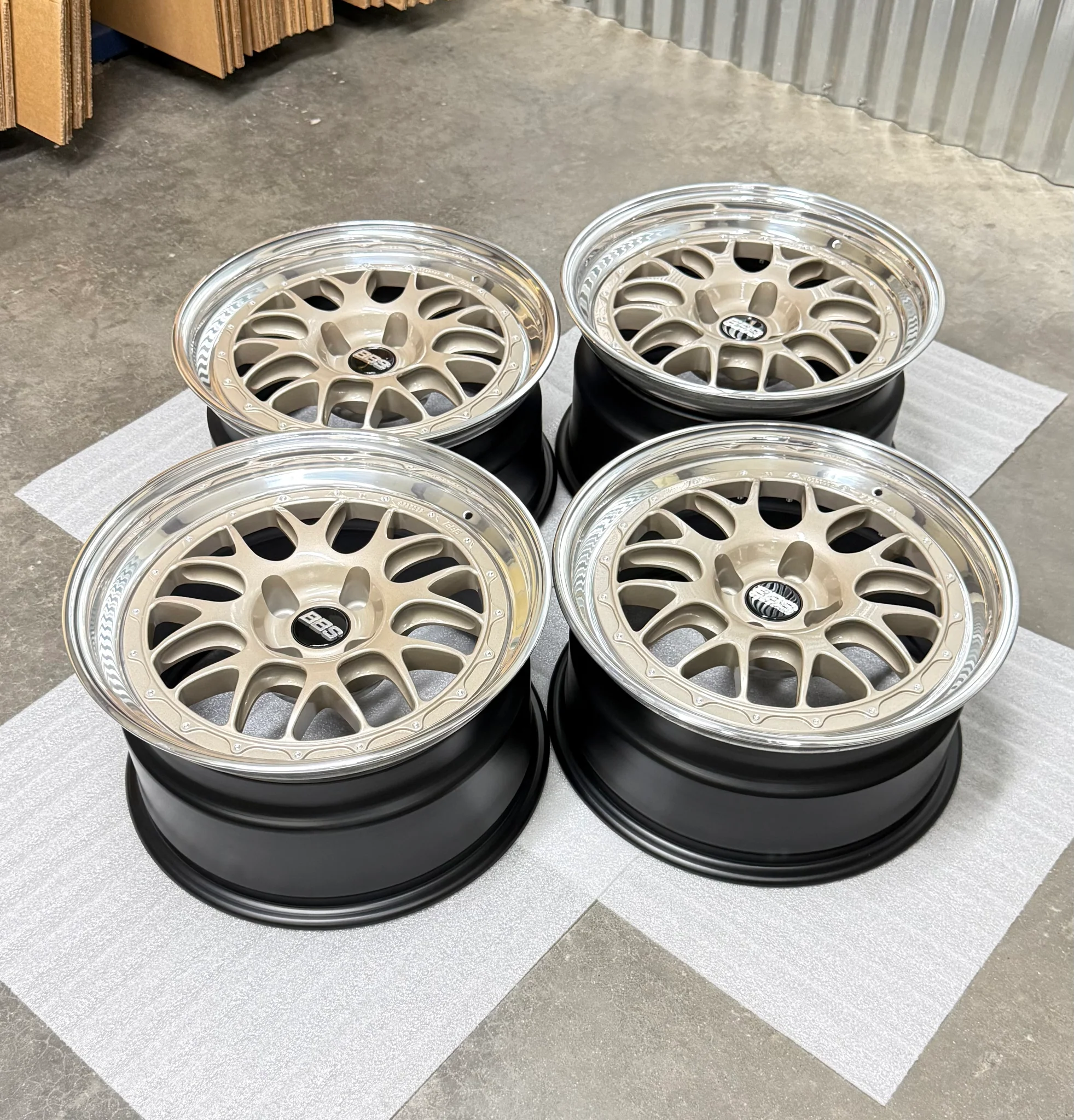
 Genuine BBS Forged Wheels Delivered to Enthusiasts Around the World
Copyright 2014 © elitebbswheels.com